
Init Sequence
Research Engineer specializing in sensor perception and AI, with expertise in computer vision, deep learning, and data engineering. Experienced in developing perception algorithms and understanding ADAS/AD functions at the system level, with hands-on experience in camera-based perception for automotive and robotic applications. Skilled at bridging research and production engineering by translating perception and AI methods into robust, scalable solutions for real-world systems. Driven by the opportunity to combine algorithmic innovation, system-level engineering, and product thinking to advance next-generation automotive mobility and intelligent vehicle experiences.
AI & Machine Learning
Data analysis, Scientific computing, Machine learning evaluation, Computer vision workflows, Automation and scripting, Explainable AI, Large-Scale Video Analytics.
Programming & Frameworks
PyTorch, TensorFlow, OpenCV, CUDA, ROS.
Infrastructure & Deployment
Docker, Kubernetes, Git, BitBucket, Cloud & On-Premises Platforms.
Hardware & Sensors
Camera/LiDAR/GNSS integration, ARM Cortex-A embedded platforms, NVIDIA DRIVE architectures, high-speed sensor interfaces, & PCB diagnostics for health monitoring.
Experience Timeline
- Research focus on explainable driver attention prediction systems for automated driving applications.
- Design computer vision pipelines for object detection, depth estimation, road segmentation, and risk-aware scene understanding.
- Develop novel evaluation metrics and benchmarking methodologies for interpretable AI and driver attention modeling.
- Manage large-scale video datasets and automated analysis pipelines comprising thousands of driving sequences and hundreds of thousands of frames.
- Conduct ablation studies, quantitative benchmarking, and qualitative explainability analyses for publication in high-impact scientific venues.
- Build scalable Python-based codebases and automated data processing pipelines for large-scale video analytics and model evaluation.
- Research focus on a real-time routing framework for road fleets, integrating environmental constraints and vehicle telemetry to optimize low-emission trajectories.
- Engineered perception modules for road scene understanding, including semantic segmentation, object detection, and lane topology extraction using camera and sensor fusion.
- Conducted in-depth analysis of driver behavior through onboard embedded systems for behavior modeling and anomaly detection.
- Developed visual perception paradigms for path planning, decision making, and autonomous control of a mobile robot deployed via ROS.
- Realized a data-driven software approach for prognostic health management of ADAS PCB components.
- Implemented various lifetime models and classical techniques for model-based time-of-failure prediction.
- Focused on Clean Coding strategies, UML software architecture, and created a continuous development pipeline with BitBucket.
Education
Publications & Projects
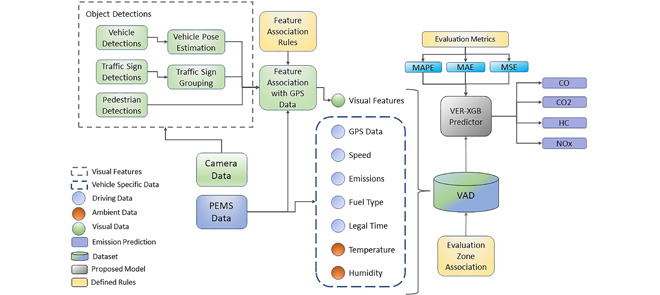 Visual Eco-Routing (VER): XGBoost Based Eco-Route Selection From Road Scenes and Vehicle Emissions
This research introduces a novel visual eco-routing framework that leverages XGBoost for optimal route selection. By analyzing road scenes alongside real-time vehicle emissions, the model predicts energy-efficient trajectories. It bridges the gap between computer vision and environmental sustainability in automotive navigation. The proposed methodology demonstrates significant improvements in reducing fuel consumption and emissions during active fleet operations.
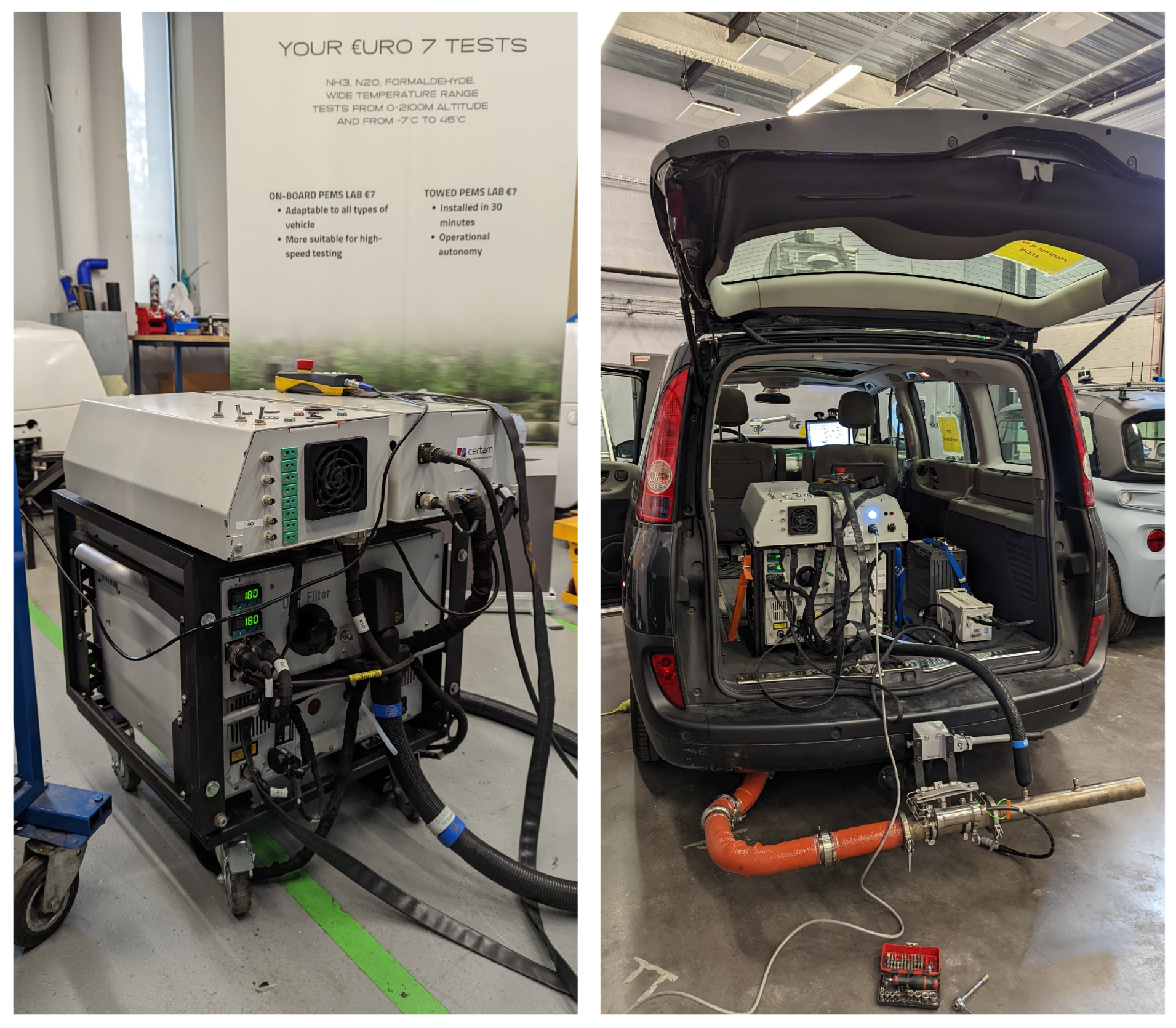 Vehicle Activity Dataset: A Multimodal Dataset to Understand Vehicle Emissions with Road Scenes for Eco-Routing
This paper presents a comprehensive multimodal dataset designed specifically for advanced eco-routing applications. It combines high-resolution road scene imagery with synchronized vehicle telemetry and emission metrics. The dataset provides researchers with robust ground-truth data to train advanced machine learning models. By linking visual contexts to fuel efficiency, it serves as a foundational tool for developing greener autonomous mobility solutions.
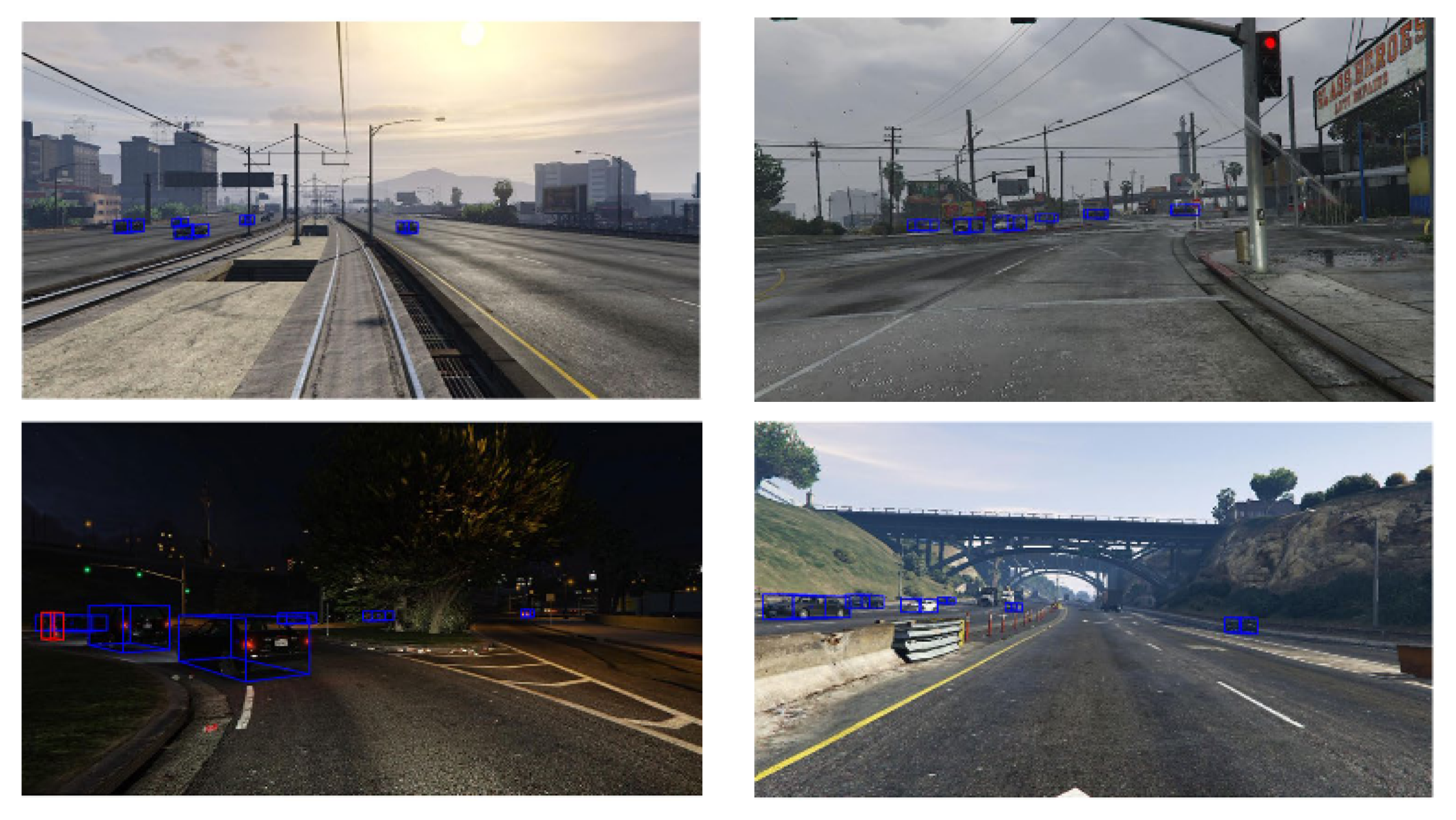 Road and Railway Smart Mobility: A High-Definition Ground Truth Hybrid Dataset (Acknowledged)
This work contributes a high-definition hybrid dataset encompassing both complex road and railway mobility scenarios. It features meticulously annotated ground-truth data to support the training of diverse perception algorithms. The dataset addresses complex environmental conditions and multi-agent interactions within smart mobility ecosystems. Consequently, it accelerates the development of reliable sensor fusion and semantic understanding systems for intelligent transport.
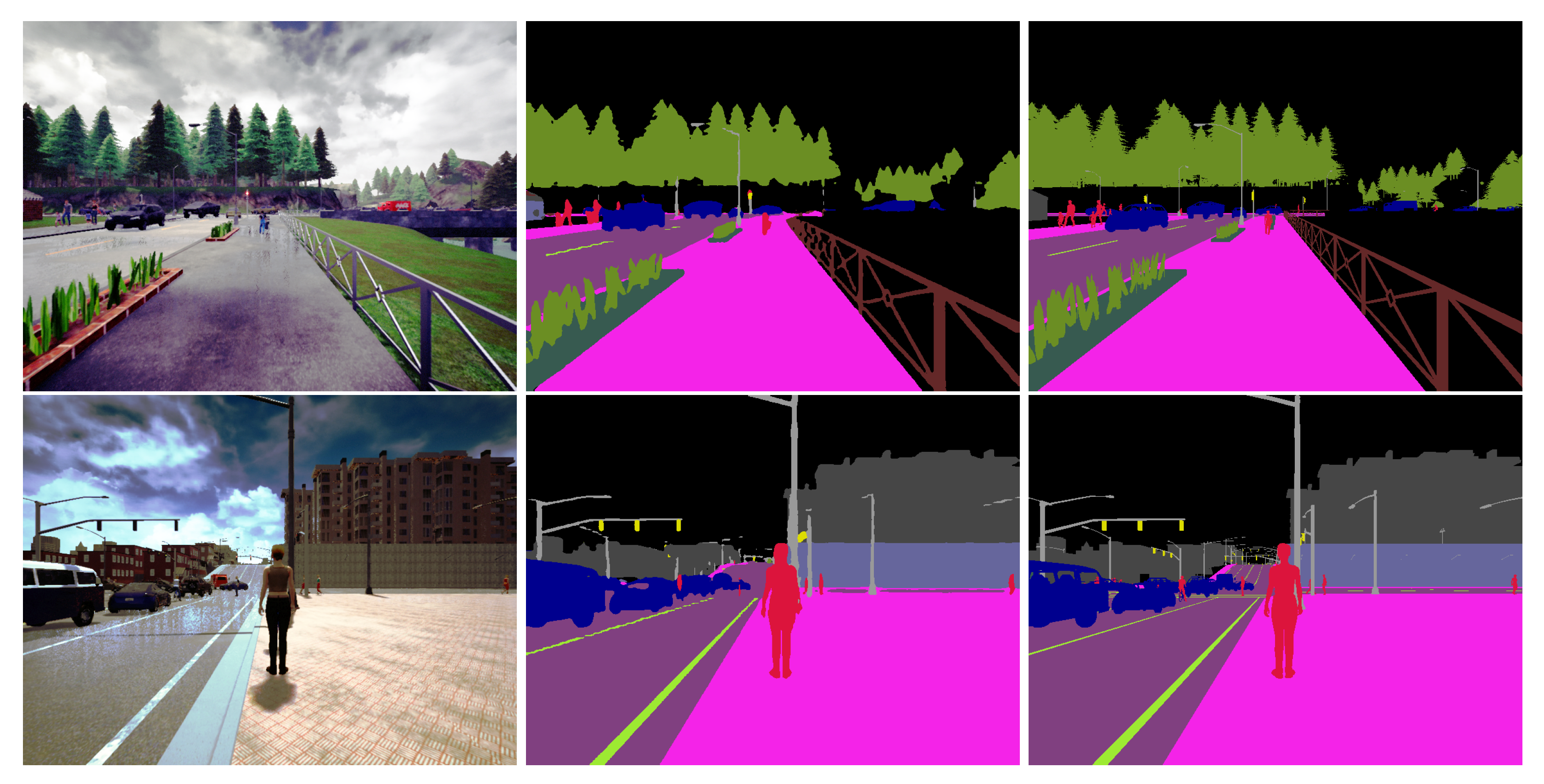 A Dataset for Temporal Semantic Segmentation Dedicated to Smart Mobility of Wheelchairs on Sidewalks
Focusing on micro-mobility and accessibility, this paper introduces a specialized temporal dataset for wheelchair navigation. It captures dynamic sidewalk environments to train and evaluate temporal semantic segmentation models. The annotated data helps algorithms anticipate pedestrian movements and navigate complex urban obstacles safely. Ultimately, this research empowers robotic wheelchairs with enhanced situational awareness and autonomous path planning capabilities.
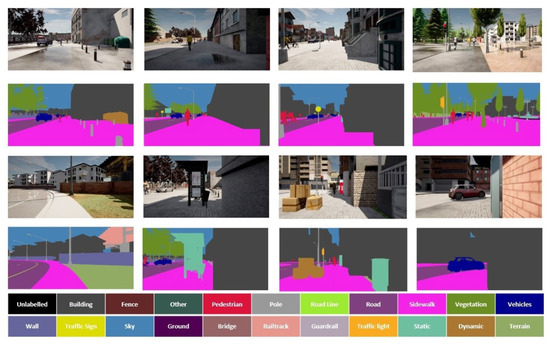 Self-Supervised Sidewalk Perception Using Fast Video Semantic Segmentation for Robotic Wheelchairs in Smart Mobility
This study details a robust self-supervised approach to sidewalk perception for autonomous robotic wheelchairs. It employs fast video semantic segmentation to process real-time visual data efficiently on embedded systems. By eliminating the need for exhaustive manual annotations, the model adapts dynamically to novel urban environments. The proposed architecture ensures safe, responsive, and robust navigation for users in evolving smart mobility contexts.
- CETRIA (2022-2023): AI-based real-time energy map allowing road fleets to plan ecologically friendly routes based on section energy costs.
- ADAPT (2021-2022): EU project co-financed by Interreg VA FMA program, uniting 16 partners to develop mobile robotics for healthcare.
- Pylife: An open-source library originally compiled at Bosch Research to aggregate algorithms for lifetime/failure mode prediction for reliablity studies.